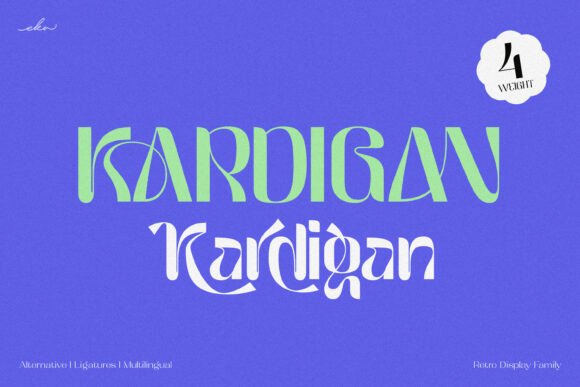
Kardigan: The Retro Display Font with a Modern Twist
There’s a certain magic in vintage design—the way it evokes nostalgia, tells a story, and instantly feels familiar. Yet, many retro-inspired typefaces can feel dated or limiting. What if you could capture that timeless charm while enjoying the flexibility and polish of contemporary typography? Enter Kardigan, a retro display family font designed to bridge the gap between yesterday’s aesthetic and today’s creative demands. With its distinctive letterforms and thoughtful features, it offers a fresh toolkit for designers and creators who want their work to feel both classic and current.
More Than Just a Nod to the Past
At first glance, Kardigan draws you in with its unique, eye-catching shapes. It’s clearly inspired by mid-century design, but it avoids feeling like a direct copy. Instead, the letterforms have been reimagined with subtle, modern refinements—smoother curves, balanced proportions, and a cohesive rhythm that works seamlessly in digital and print environments. This isn’t a font that merely imitates the past; it translates vintage personality into a versatile, professional asset. The result is a typeface that feels both nostalgic and fresh, making it ideal for projects that aim to stand out without sacrificing readability.
One of Kardigan’s strongest practical advantages is its range. The font family includes four distinct weights, from a delicate light to a commanding bold. This variety allows you to create visual hierarchy within a single typeface system, ensuring consistency across different applications. You might use the lighter weight for elegant subheadings on a wedding invitation and switch to the bold weight for a striking event poster. Having this flexibility built into one family simplifies the design process and helps maintain a unified brand voice.
Unlocking Creative Potential with Alternates and Ligatures
Where Kardigan truly shines is in its extensive set of alternative characters and stylish ligatures. These aren’t just decorative extras; they’re functional tools that give you granular control over your typography. Want to add a more playful, handwritten flair to a logo? Swap in a stylistic alternate for a key letter. Looking to create a smoother, more connected flow in a headline? Use a ligature to join letters in a way that feels organic and intentional. This level of customization is what separates a good design from a great one, allowing you to tailor the font’s personality to fit the exact mood of your project.
Imagine you’re designing a brand identity for a new artisan coffee shop. The goal is to feel authentic, warm, and slightly retro. Using Kardigan’s standard characters for the main logo gives you a solid, recognizable base. Then, by selectively applying alternates to the shop’s initials or using ligatures in the tagline, you can inject a unique character that makes the brand feel bespoke and memorable. This approach works just as well for a craft brewery’s label, a boutique clothing tag, or a digital course logo. The font becomes a partner in the creative process, not just a static tool.
Practical Applications Across the Design Spectrum
The versatility of a display font like Kardigan makes it a valuable asset for a wide range of projects. Its strong visual presence is perfect for applications where you need to capture attention quickly and convey a specific mood.
- Branding & Logo Design: Build a distinctive brand identity with a typeface that has inherent personality. The different weights allow for a full system, from wordmarks to supporting text.
- Packaging & Labels: Make products stand out on the shelf. Kardigan’s retro vibe is perfect for gourmet foods, craft beverages, or cosmetics that want to tell a story of quality and tradition.
- Posters & Editorial Layouts: Create eye-catching posters, magazine covers, or book chapter headings that demand attention and set a clear tone.
- Social Media Graphics & Web Design: Develop a cohesive and engaging visual feed. Use it for quote graphics, announcement banners, or key website headings to build brand recognition.
- Invitations & Digital Products: Design wedding invitations, event flyers, or downloadable planners with a touch of nostalgic elegance that feels personal and high-end.
Pairing for Purpose and Readability
A common question with any distinctive display font is how to use it effectively without overwhelming a design. The key is to treat Kardigan as the star of the show and pair it with a more neutral supporting cast. For body text, a clean, simple sans-serif or a highly readable serif font works beautifully. Think of a classic like Helvetica, Open Sans, or a humanist serif like Lora. This contrast ensures that headlines pop with personality while longer paragraphs remain comfortable to read.
Always test your font pairings in context. Create a mockup of your social media post, your website header, or your product label. Check the spacing, the color contrast, and the overall visual balance. Remember that the goal is clear communication. Kardigan’s alternates and ligatures are fantastic for short, impactful text, but for body copy, clarity should always come first. Review the included font styles carefully—sometimes the regular weight with standard characters is the most effective choice for a clean, professional look.
Considering the Commercial Landscape
When choosing a premium font for client work or your own business, licensing is a crucial consideration. Always ensure you understand the terms of use. A quality commercial font like Kardigan will typically offer a license that covers a wide range of projects, from logos and websites to printed merchandise. This upfront investment provides legal peace of mind and ensures you’re using a professionally crafted asset that won’t cause issues down the line. It’s a small but vital step in building a reputable and sustainable creative practice.
Ultimately, the right typeface does more than just display words. It communicates values, evokes emotions, and builds connections. Kardigan offers a rare combination: a strong, nostalgic visual identity backed by the flexibility and technical polish needed for modern design work. It’s a tool for creators who appreciate the past but are firmly focused on crafting the future—one compelling letterform at a time.