Henry: A Gothic Typeface with Macabre Elegance
Imagine a font that doesn't just sit on the page but seems to breathe a story of candlelit corridors, specimen jars, and whispered secrets. That's the immediate impression of Henry, a premium gothic display typeface that feels less like a digital file and more like a discovered artifact. It’s the kind of typeface that stops your scroll, making you lean in to appreciate its intricate, slightly unsettling details. For designers and creators working in specific niches—dark fantasy, alternative branding, atmospheric events—finding a font with this level of character and craftsmanship can be the missing piece that transforms a good project into an unforgettable one.
Where Victorian Architecture Meets Liquid Shadow
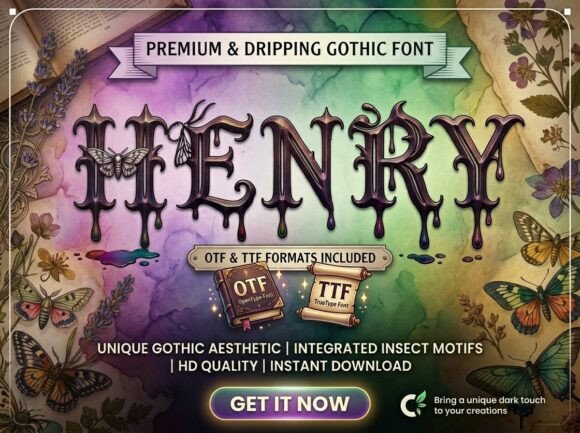
What sets Henry apart is its masterful fusion of historical weight and modern, textural intrigue. The foundation is a set of sharp, architectural letterforms reminiscent of Victorian-era engravings and tombstone inscriptions. There's a structural integrity and a sense of age to each character. But the genius lies in the details that subvert that classicism. The terminals—the ends of the strokes—don't simply stop. They dissolve into a subtle, liquid-texture "dripping" effect, as if the ink itself is alive and slightly viscous. This creates a captivating tension between the rigid and the fluid, the historical and the supernatural.
Then, woven into the alphabet's DNA, are integrated insect motifs. Delicate moth wings might form the crossbar of a 't', or the silhouette of a beetle could subtly ornament a capital letter. These aren't clumsy clip-art additions; they are meticulously crafted elements that feel organic to the typeface's design. The overall effect is one of macabre elegance, perfectly capturing the vibe of a dimly lit natural history museum's cabinet of curiosities. It’s a high-definition creative font built for projects that demand a distinct, atmospheric presence.
Practical Applications for Darkly Inspired Projects
Understanding where a typeface like Henry shines is key to using it effectively. Its highly decorative nature means it's not for body text, but as a display font, its applications are both specific and powerful.
For Branding and Logo Design: Henry is an exceptional choice for brands that trade in mystery and alternative aesthetics. Think boutique perfume houses with gothic scents, independent bookstores specializing in horror or occult literature, craft breweries with dark, complex stouts, or event planners for immersive Halloween experiences. In a logo, Henry provides instant brand recognition and communicates a specific mood before a word of copy is read. Pair it with a clean, neutral sans serif font for contrast in supporting text to maintain readability.
Packaging and Merchandise: On product packaging, Henry can turn a label into a story. It’s ideal for coffee blends with names like "Dark Roast Revenant," for artisan chocolate brands with a noir twist, or for vinyl record sleeves from gothic rock bands. For merchandise like t-shirts, posters, and tote bags, the font's intricate details ensure it looks stunning at scale, rewarding close inspection.
Digital and Editorial Design: In the digital realm, Henry excels in creating impactful hero images for websites, blog headers for niche publications, and captivating social media graphics. For a YouTube channel exploring folklore or a podcast about unsolved mysteries, using this typeface for title cards sets an immediate atmospheric tone. In editorial layouts, such as magazine features on dark art or book covers for fantasy novels, it commands attention on the cover and chapter titles, framing the content within its unique visual world.
Pairing and Practicality: Making Henry Work
Using a display font with such a strong personality requires a thoughtful approach to ensure your overall design remains clear and professional. The goal is to let Henry be the star of the show without overwhelming the audience.
The Art of the Pairing: The most effective strategy is to contrast Henry with a simple, highly readable typeface. A geometric sans serif font (like Montserrat or Poppins) or a clean serif font (like Lora or Merriweather) works beautifully for subheadings and body text. This creates a clear visual hierarchy, where Henry establishes the mood and the supporting font delivers the information. Avoid pairing it with other decorative or script fonts, as this will create visual chaos.
Readability First: Always consider context. Henry is perfect for a single, powerful headline or a short brand name. It is not designed for paragraphs of text. Use it sparingly for maximum impact—on a hero banner, a product name, or a key call-to-action button where atmosphere is more important than scanning speed. Test it at various sizes to ensure the intricate details remain legible, especially in smaller digital displays.
Licensing and Assets: When investing in a premium font like Henry, always review the commercial licensing terms. Ensure the license covers your intended use, whether it's for a client project, merchandise for sale, or a digital product. A well-crafted typeface family often includes different styles—check if it comes with alternate characters, ligatures, or additional motifs that can give you more creative flexibility.
Crafting a Cohesive Dark Aesthetic
Ultimately, Henry is more than just a collection of letters; it's a design asset for world-building. Its strength lies in its ability to inject a consistent, evocative atmosphere into every touchpoint of a project. For a small business owner, using this typeface across the logo, website headers, and product packaging creates a unified brand identity that is instantly recognizable and deeply immersive. For a content creator, it establishes a signature style that followers will associate with your unique voice.
The key to its successful use is intentionality. Choose Henry when the project's narrative aligns with its dark, elegant, and slightly unsettling character. It’s the definitive choice for dark fantasy book covers, atmospheric Halloween branding, alternative streetwear labels, and mysterious editorial layouts. By embracing its macabre elegance, you bring a unique, handcrafted dark touch to your creations, transforming them from simple designs into compelling visual experiences.