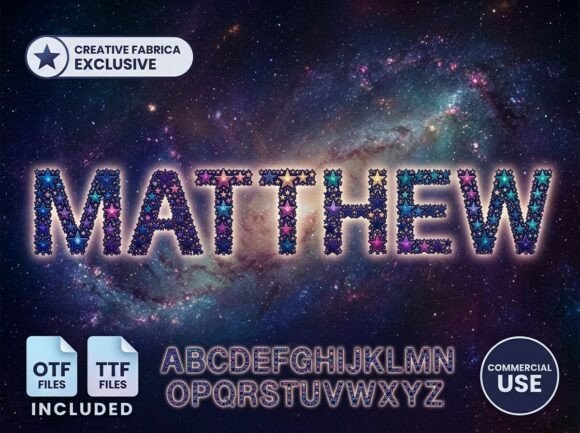
Reach for the Heavens: The Cosmic Allure of Matthew Typeface
There is a specific moment, usually late at night, when you look up and realize just how small we are against the vastness of the cosmos. It is a mix of humility and wonder that is difficult to capture in static art. Yet, in the world of design, we are constantly asked to convey big, abstract emotions—trust, innovation, mystery, and the future. When standard sans-serifs and serifs feel too grounded, too terrestrial for your vision, you need a tool that speaks the language of the stars. Enter Matthew, a display font that doesn’t just sit on the page; it orbits it. Designed to evoke the swirling, ethereal beauty of a nebula, Matthew offers a visual experience that feels less like typography and more like a celestial event.
For designers, entrepreneurs, and content creators, the search for a font that balances readability with high-concept artistry is often a struggle. You want something that commands attention, but you also need it to serve a purpose. Matthew bridges that gap by utilizing a complex starlight texture within its letterforms. Imagine the deep blues, purples, and glowing pinks of a distant galaxy, condensed into the strokes of a typeface. This is the defining characteristic of this premium font. It isn't just about the shape of the letters; it is about the atmosphere they create. If you are working on a project that needs to feel futuristic, dreamy, or awe-inspiring, this typeface provides a shortcut to that specific visual language.
Capturing the Nebula Aesthetic
Visual branding is all about psychology. Before a customer reads the word "Coffee" on your bag, they have already judged the quality based on the typography. If the font is cheap or generic, the product feels cheap. If the font is elegant and intentional, the product feels premium. Matthew falls firmly into the latter category, but with a distinct twist. Its visual characteristics lean heavily into the "cosmic" trend that has dominated modern typography in sci-fi, tech, and wellness industries.
The texture of Matthew is where the magic happens. Unlike a standard bold font that relies on solid blocks of color, Matthew uses a complex, starlight-flecked texture that mimics the gaseous clouds of a nebula. This gives the font an incredible amount of depth. It feels three-dimensional, as if the text is glowing from within. This ethereal glow makes it an exceptional choice for dark mode designs. When placed against a deep black or navy background, the font comes alive, creating a high-contrast, cinematic look that is perfect for title cards, movie posters, or gaming logos.
However, don't mistake "cosmic" for "niche." While it is certainly the definitive choice for astronomical branding or sci-fi book covers, the aesthetic versatility of a font like this is broader than you might think. The "glow" effect can be interpreted as neon, making it suitable for cyberpunk themes, nightlife event flyers, or music festival branding. It can also read as "magical" or "ethereal," making it a strong contender for fantasy novel covers, spiritual retreat branding, or high-end cosmetic packaging that promises a "glowing" complexion.
Practical Applications: From Screen to Print
One of the biggest challenges with decorative or display fonts is that they often fail to translate well across different mediums. A font might look great on a 4K monitor but turn into a muddy blob when printed on a tote bag. When integrating Matthew into your design assets, it is important to understand its strengths.
Digital Dominance
This typeface shines brightest in the digital realm. If you are a content creator or social media manager, you know the pain of the "scroll-stop." You have less than a second to grab a user's attention on Instagram or TikTok. Matthew acts as a visual anchor. Using it for a single headline or a "swipe up" call-to-action creates an immediate focal point. It pairs beautifully with clean, modern sans-serif fonts for body text (think Montserrat or Open Sans), allowing the headline to be the star while keeping the caption highly readable.
For web design, Matthew is best used for "Hero" sections—the large banner area at the top of a homepage. It sets the mood instantly. Whether you are launching a tech startup, a digital agency, or a creative portfolio, using this font for your value proposition can immediately establish a brand identity that feels innovative and forward-thinking. Just ensure that the file is optimized for web use so that the intricate textures don't slow down your page load speed.
Tangible Impact
Print design requires a different approach. Because of the detailed texture within the letterforms, Matthew works best on high-quality paper stock. It is a fantastic choice for premium invitations, such as for a gala, a themed wedding, or a launch party. It adds a layer of sophistication and exclusivity that standard fonts cannot match.
It is also a powerhouse for merchandise. Think about apparel design—specifically, screen printing or DTG (Direct to Garment) printing on dark t-shirts or hoodies. The "ethereal glow" effect of the font translates exceptionally well to fabric, giving the merchandise a high-end, boutique feel rather than a cheap promotional vibe. For packaging design, consider using Matthew for the product name on a matte black box. The contrast creates a tactile, luxurious experience for the customer before they even open the product.
Mastering the Pairing: Balance is Key
Every experienced designer knows that a font rarely works alone. Typography is about hierarchy and conversation. Matthew is a "loud" font. It demands attention. If you try to write an entire paragraph in this typeface, you will overwhelm the reader, and the text will likely be difficult to read at smaller sizes. This is true for almost all premium display fonts; they are designed for impact, not for body copy.
To get the most out of this celestial typeface, you need to pair it with a quiet partner. A geometric sans-serif is usually the best companion. The clean, straight lines of a sans-serif will contrast with the organic, glowing edges of Matthew, creating a pleasing visual rhythm. For example, if you are designing a sci-fi book cover, use Matthew for the title to draw the eye in, but use a crisp sans-serif for the author's name and the synopsis on the back.
When testing your font pairings, pay close attention to weight and spacing. Because Matthew has a complex texture, it can appear visually "heavy" even at regular weights. You may need to increase the letter spacing (tracking) slightly to let the starlight textures breathe, preventing the letters from blurring into one another. Always print a test sheet or view your design on a mobile phone to ensure the legibility holds up at the size your audience will actually experience it.
Strategic Branding and Licensing
Choosing a typeface is a business decision as much as an artistic one. If you are an entrepreneur or a small business owner, you need to consider the longevity and adaptability of your font choice. Matthew is a specialized tool. It creates a very specific brand voice—futuristic, premium, and imaginative. It is the wrong choice for a law firm or a local bakery, but it is the perfect choice for a VR gaming company, a music producer, or a high-tech gadget brand.
Furthermore, when investing in a creative font, always review the commercial licensing. Most premium fonts come with different tiers based on usage. A license for a personal blog or a single social media account is different from a license for a global advertising campaign or mass-produced merchandise. Ensure that the license covers all the platforms where you intend to use the font. This protects you legally and ensures the designer is compensated for their work in creating such a complex asset.
Ultimately, typography is the voice of your brand. You want that voice to be heard clearly in a crowded market. By incorporating a typeface with the visual weight and unique texture of Matthew, you aren't just choosing letters; you are choosing to stand out. You are signaling to your audience that your brand values creativity, quality, and a vision that goes beyond the ordinary. Whether you are crafting the next great sci-fi novel, designing a logo for a startup, or creating social media graphics that stop the scroll, reaching for the heavens might just be the best design decision you make.